Are You The Victim or Villain In Your Marriage?
The Victim and the Villain: Why This Mindset Damages Relationships
Almost every struggling relationship eventually falls into a familiar story.
Someone becomes the victim. Someone becomes the villain.
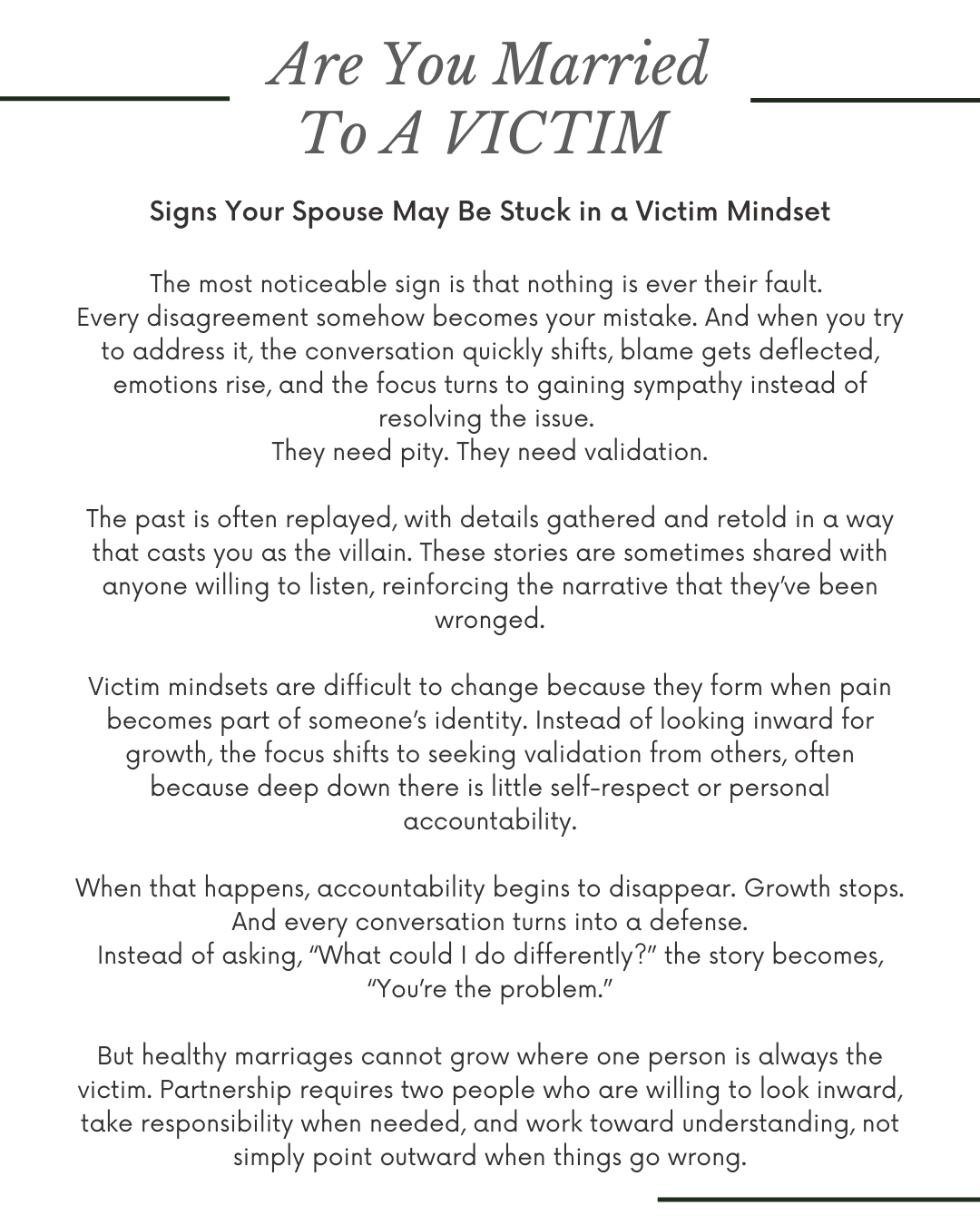
The victim feels hurt, misunderstood, or mistreated. The villain becomes the one blamed for the damage. Once those roles are assigned, the relationship changes. Conversations stop being about understanding—and start being about defending.
The victim collects evidence.
The villain grows defensive.
And both people begin protecting themselves instead of protecting the relationship.
Why This Dynamic Is So Powerful
The victim role feels validating. It explains the pain. It gives a clear reason why things feel wrong. And it removes the uncomfortable responsibility of looking inward.
But there’s a hidden cost.
When someone stays in a victim mindset, they begin to see every disagreement through the same lens:
I’m the one being hurt. They’re the one causing the damage.
Over time, this mindset makes it nearly impossible to be equals in the relationship. This is because equality requires shared responsibility. Victim thinking removes that balance.
The Problem With Villains
Labeling someone as the villain might feel justified in the moment, especially if real hurt has occurred. But when a person is permanently cast as the villain, the relationship loses its ability to heal.
Villains are not partners.
Villains are opponents.
Once someone is seen as the enemy, every action they take is filtered through suspicion. Even their attempts to improve can be dismissed as manipulation or insincerity.
And eventually, many people who are treated like villains stop trying altogether.
Why Victim Mindsets Attract Validation, Not Growth
Another consequence of victim thinking is that it shapes the kind of support people seek.
Instead of surrounding themselves with people who challenge them, victims often gravitate toward those who reinforce the story.
Friends who say:
“You deserve better.”
“They’re the problem.”
“You’ve done everything you can.”
Validation feels comforting. But when validation replaces reflection, growth stops.
Healthy relationships require people who are willing to ask harder questions:
What part did I play in this pattern?
What could I do differently next time?
Am I contributing to the dynamic I dislike?
Those questions can feel uncomfortable, but they lead to transformation.
Healthy Couples Refuse the Roles
Strong relationships don’t operate with heroes and villains.
They operate with two imperfect people committed to understanding each other better.
That doesn’t mean ignoring hurt or pretending everything is fine. Real harm should be acknowledged and addressed. Accountability matters.
But growth happens when couples move from:
Who’s at fault?
to
How do we repair this together?
When both people are willing to examine themselves, even slightly, the relationship regains balance.
Replacing the Story
If you feel stuck in the victim–villain cycle, start with one simple shift:
Replace accusation with curiosity.
Instead of saying:
“You always make me feel this way.”
Try asking:
“What’s happening between us right now?”
Instead of declaring:
“You never listen.”
Try saying:
“I don’t feel heard when this happens.”
These changes might seem small, but they break the pattern of assigning roles.
And once the roles disappear, real conversation can begin.
The Real Goal: Partnership
Marriage isn’t about proving who’s right.
It’s about building something that lasts.
That requires humility, accountability, and the willingness to see your partner as a teammate, not an opponent.
Because the healthiest relationships are the ones where neither person has to play the victim… and neither person is forced into the role of the villain.
They simply work together to solve the problem.
Get weekly Date Night Ideas.
Sign up for our weekly Newsletter...
Resources

It's hard to move forward when you're consumed by the pain!

7 Phases of betrayal every couple must go through.

Built on 9 years of proven steps to transform communication and reconnect couples.
About me

Hi, My name is Dolly, and I've been a marriage coach for over 9 years after rebuilding my own marriage and realizing how hard it is to find answers, actions steps, and support! For those ready to make a change, join us!